
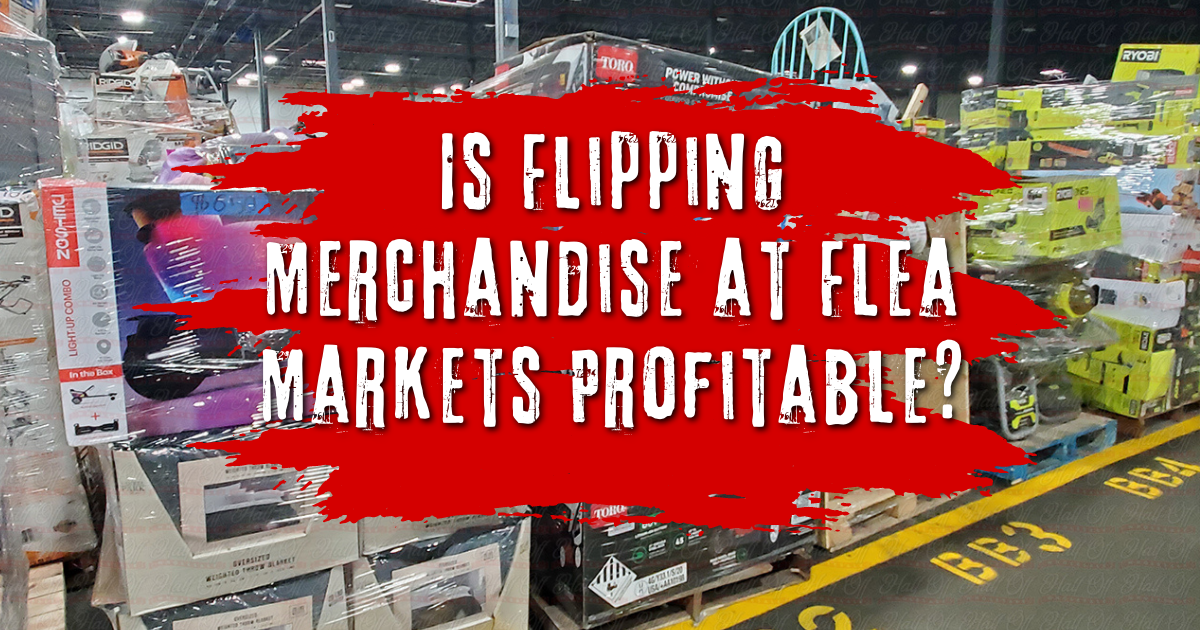
Is Flipping Merchandise at Flea Markets Profitable?
Flipping merchandise at flea markets can be a profitable way to move inventory, especially when you are working with wholesale pallets or liquidation products that give you room for strong margins.
The opportunity comes from how well your inventory fits the environment, because flea markets are built around value, variety, and quick buying decisions. When your products and pricing align with that mindset, selling becomes much more efficient.
With the right approach, flea markets can turn into a consistent outlet for moving inventory while also helping you learn what customers respond to in real time.
Why Flea Markets Work for Resellers
Flea markets create a unique selling environment where buyers are actively looking for deals, and that behavior naturally supports inventory that is priced well and easy to understand.
The lower overhead compared to a traditional retail setup also gives you more flexibility, because you are not carrying the same long-term expenses that come with a storefront. That flexibility allows you to adjust your pricing, test different products, and move inventory faster without being locked into one approach.
At the same time, the in-person nature of flea markets builds immediate trust, because customers can see, touch, and evaluate products before purchasing, which often leads to quicker decisions.
Profit Comes From How You Approach Pricing and Volume
Flea market selling tends to reward movement and volume, because customers are often comparing multiple vendors and making quick decisions based on perceived value.
A pricing strategy that encourages steady sales can help you move inventory more consistently while still maintaining strong margins.
📦 Focus on pricing that feels like a deal, not just maximum markup
💰 Be willing to adjust pricing throughout the day based on traffic and demand
🛒 Keep a range of price points so you can appeal to different types of buyers
When your pricing is aligned with how people shop at flea markets, your inventory tends to move faster and more predictably.
The Advantage of a Wide Product Mix
Wholesale pallets naturally give you a variety of products, and that variety works well in flea market environments where customers are browsing and looking for something that catches their attention.
A broader mix allows you to appeal to different buyers without needing to specialize too narrowly, which increases your chances of making sales throughout the day.
Grouping similar items together and creating small bundles can also help increase perceived value, especially when customers feel like they are getting more for their money.
When your setup is easy to browse and visually clear, customers are more likely to stop, engage, and buy.
Flexibility Creates Opportunity
One of the biggest advantages of flea markets is the ability to adapt quickly, because you are not locked into a fixed layout or long-term structure.
You can test different product types, adjust your setup, and refine your approach based on what you see working in real time. That flexibility makes it easier to learn your market and improve your results with each event.
Over time, this creates a clearer understanding of which products perform well, which price points move faster, and how your inventory should be structured for the best outcome.
Turning Flea Markets Into a Reliable Sales Channel
Flea markets work best when they are treated as part of a larger strategy, because they can be used to move certain types of inventory faster while other channels handle different product categories.
When your approach is structured, flea markets can become a consistent way to turn inventory into cash while also giving you valuable insight into customer behavior.
That combination of cash flow and real-time feedback makes them a powerful tool for resellers who want to grow efficiently.
Use the Right Tools to Maximize Your Results 📈
Flea market selling becomes much more effective when you have a clear way to track what sells, manage your inventory, and refine your approach over time.
The Reseller’s Guide includes tools like the Inventory Management Tracker and Reseller Marketing Strategy Worksheet, which help you stay organized and adjust your selling strategy based on real performance.
The Profitable Pallets Guide supports your buying decisions with tools like the Pallet Inventory Worksheet, so you can better understand what inventory is worth bringing to events and how it fits your pricing strategy.
If you want help deciding how to price or bundle items before your next market, the free AI Reseller Assistant can guide you in real time so your decisions stay aligned with your goals.
When your process is structured, flea markets become more than just a place to sell, and they become a consistent part of your overall business strategy.