
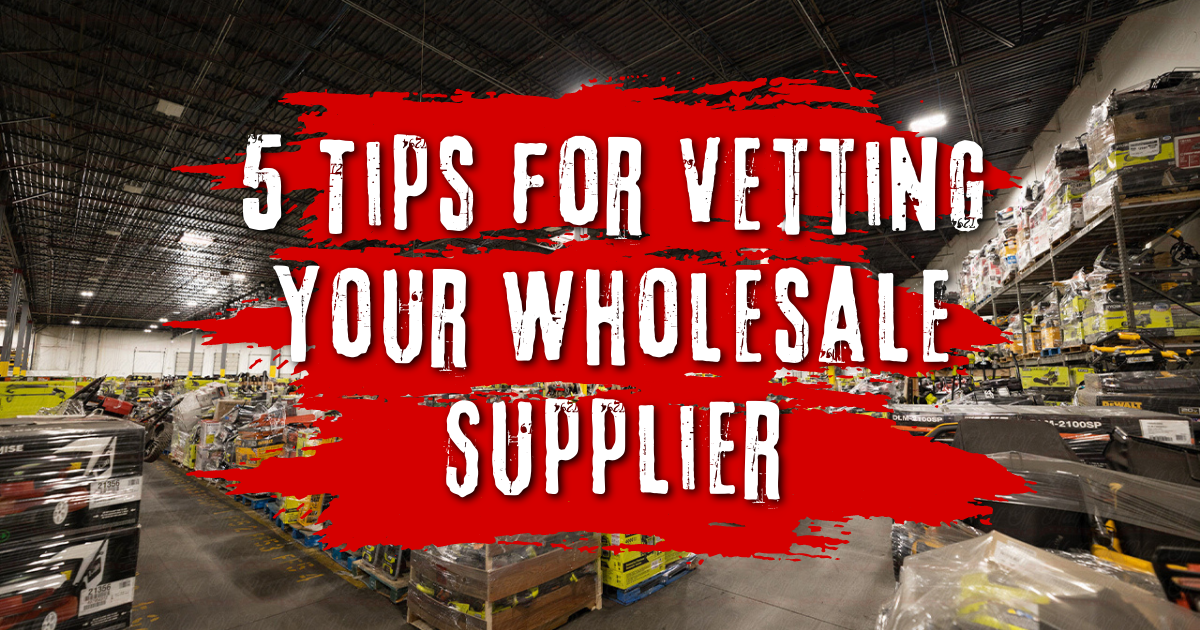
5 Tips for Vetting Your
Wholesale Supplier
When you’re a retailer or an entrepreneur dealing in merchandise, working with wholesale liquidation suppliers can be a game-changer. However, just as it’s crucial to choose products that resonate with your customers, it’s equally important to meticulously vet the suppliers you plan to work with. This article highlights best practices for vetting wholesale liquidation suppliers to ensure that you collaborate with credible and trustworthy companies.
Understand the Significance of Vetting
Before diving into the best practices, it’s essential to understand the significance of vetting suppliers. The wholesale liquidation industry is notorious for having a mix of genuine and fraudulent players. By rigorously vetting suppliers, you shield your business from potential financial losses, legal issues, and the erosion of your brand reputation due to substandard products.
The Best Practices
- Research the company: While customer reviews and testimonials are a great place to start, don’t stop there. Look into the history of the company; how long has it been in business? What is their primary focus? Are they specialized in certain categories of products? Explore their digital footprint, including their website, social media profiles, and any news articles about them. This will help you get an idea of the company’s standing in the industry.
- Ask for references: Nothing speaks louder than the word of current or past customers. Ask the supplier for references. But be mindful that no company will give you a bad reference. So, take this information with a grain of salt, and cross-verify by looking for independent feedback on online forums and social media. See what our customers are saying about us!
- Review the terms and conditions: Carefully review the terms and conditions of your potential agreement. Look out for aspects such as payment terms, minimum order quantities, shipping policies, return policies, and warranties. Make sure there are no hidden fees or terms that might be unfavorable to your business.
- Trust your instincts: Trust your gut feeling. Your intuition combined with data can often lead you in the right direction. If a deal seems too good to be true, or if something seems off, it might be best to walk away.
- Monitor ongoing performance: Vetting should not be a one-time process. After you have selected a supplier, it’s important to continuously monitor their performance. Are they consistently delivering good quality products? Are they meeting the delivery schedules? Make sure that the supplier continues to meet your expectations and standards.
Vetting wholesale liquidation suppliers is more than just a procedural step; it’s an essential component of building a resilient and successful business. By following these best practices, you’ll be better equipped to make informed, strategic business decisions that contribute positively to your bottom line and brand reputation.